Category Archives: Running On Emotion

Think about this stuff on your next run

My Club Nats Cross Country Club

At the end of last year, I ran my first cross country in 35 years, the USA Track and Field Cross Country Club National Championships held in Bethlehem, PA.

I covered the race for Runners World and got to meet an incredible variety of inspiring runners, from the elite to the everyday, that came to the Lehigh University campus to participate in the event.

Over the next few weeks, in anticipation of the article being published in the September 2015 issue, I want to introduce you to my own little “cross country club,” some of the runners whose story didn’t make it into the Runners’ World article.

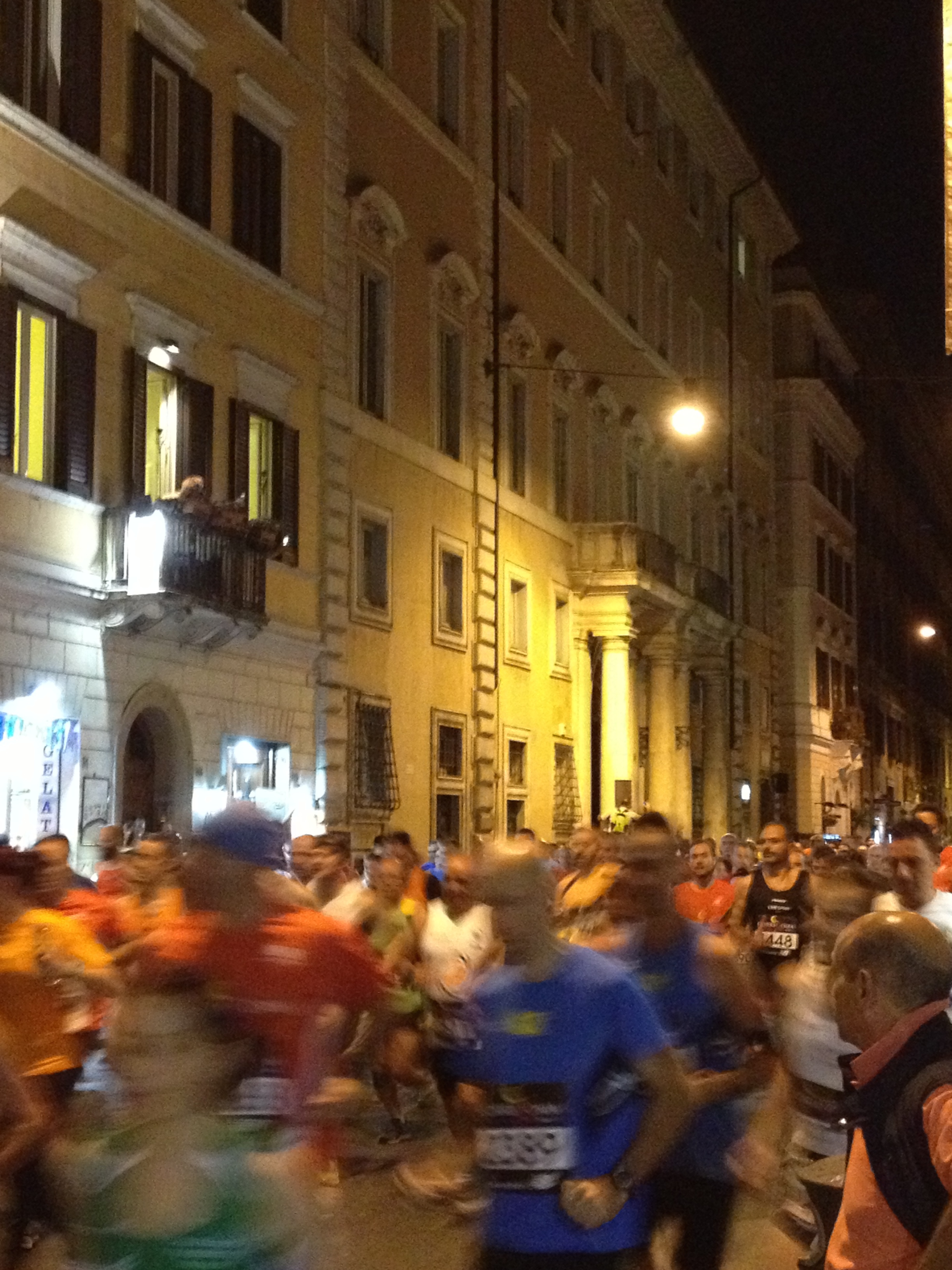
They are probably not unlike the nameless, numbered people that line up next to you in any race you will run this summer or fall.   Keep this in mind as you wait in the crowd behind your next starting line with awkward anticipation, just wanting everyone to get out of your way: every runner has a story.
10411150_794649317275464_3122400833235870768_n
At some point, it’s time to run through emotional issues, not away from them.

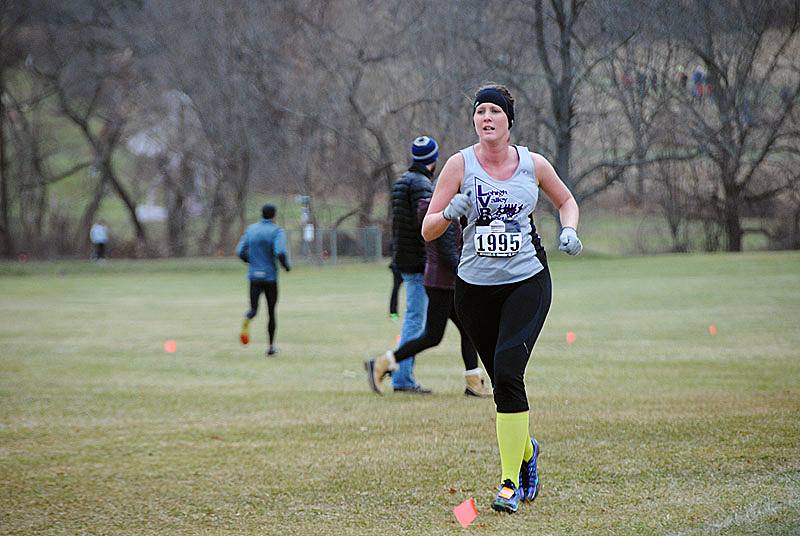
I have to start with Heather Hawthorne, a fellow member of the Lehigh Valley Road Runners, our local running group that both helped host the event and sponsored men’s and women’s teams in the races.

Heather ran the race, not for glory or ego but to simply recapture a little piece of herself that got put on the shelf during adolescence.

As an eighth grader, she was recruited to join the high school team.

“I was really excited to sign up, but my mom had other ideas,” shares Hawthorne. “She was a single mom and wanted her only daughter to be a ‘girly girl’, and running cross country wasn’t very girly.”

So though she’s run 3 marathons and the women’s open race is only a 6K, she’s a nervous bundle of energy when I talk to her the night before. Long held dreams that are about to come true have a way of doing that. “This is my chance to finally do it. I’ve waited so long to run this race,” she says. “To be that girl again.”

And she was.   Heather survived the women’s open race. She did not come in last, which was one of her outcome goals, but let’s just stay Heather never threatened Laura Thweatt, who won the race for the second year in a row, in 19:14.41.

But competing at the front of the pack was hardly the point. Heather won plenty that day.

“Running Club Nats helped me let go of something I wish I had been able to let go of when I was younger, but couldn’t,” she said.   “And it showed me how important it is to be patient, have faith, and pay attention. Sometimes missed opportunities have a way of manifesting again later on in life, as this did for me,” she said.

And Heather just keeps going.
IMG_5023
What kind of emotional challenges has running helped you face?

On August 2, two days before my article about the Club Nats race will be published in the September issue of Runners World, Heather will be putting her toes in the water of her next “personal project” as she has come to call her athletic challenges.

She will be competing in her first triathalon, the Jersey Girl on August 2, in Long Branch, NJ. Heather’s race may be even more daunting, for a number of emotional and physical reasons. But I’ll let Heather tell that story herself another day.

What’s exciting to know is that a running race like Club Nats can not only provide a unique racing experience and invigorating physical achievement, but can also be part of a healthy psychological approach to personal growth and fulfillment.

What kind of emotional challenges has running helped you face?
My Danny Diaz Moment

When I lined up at the start of the USATF National Club Championships in December, I was a bit of an underdog.  I was running my first XC race in more than 30 years, and it was against what I had been told was the most competitive masters’ field of any race all year.   I was about to be crushed.

But that wasn’t the point.  I was there to compete.  To see what it was like to toe the line with the best of my generation.  I did my preparation as best I could in my busy life and reasoned once I got to that starting line, Que Sera Sera.  What will be will be.

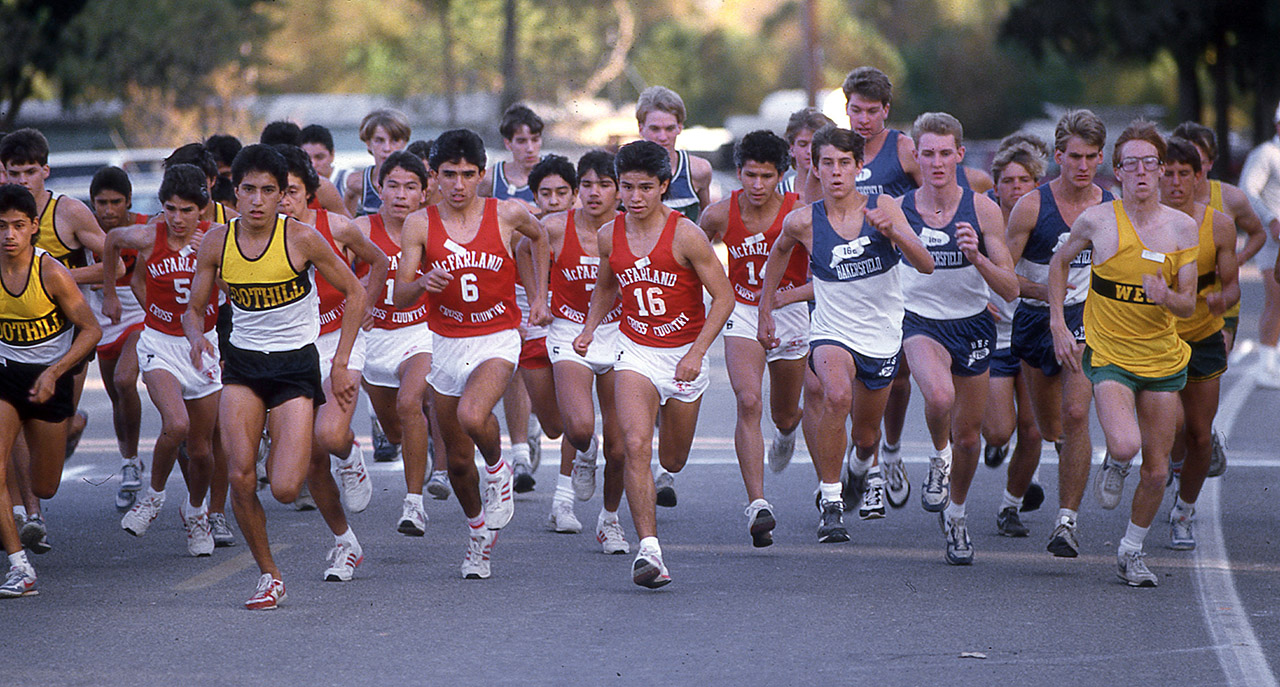
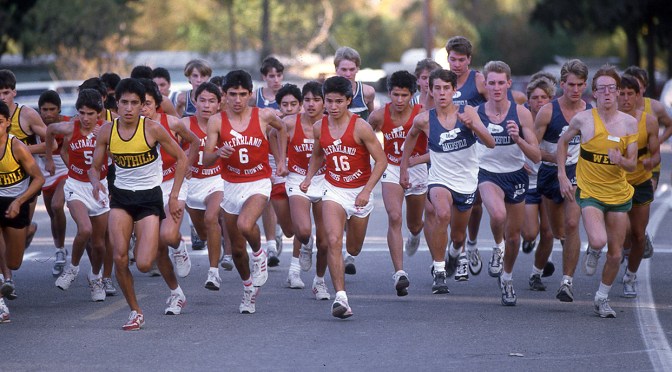
So it wasn’t unlike the underdog runners in McFarland USA: Championship Run, the Disney movie which is being released on DVD this week.  The stakes for them were much higher, and the work they put into their race was well beyond my modest training. But perhaps the real runners that the story was based on, felt something like I felt at that moment when I began to look around at the better-trained, better-outfitted, more-experienced guys who bolted off the line as the gun went off,  “Do I really belong here?”

mcfarland_add_3
We all start as a team, but each must face the course alone.

In the movie, the underdog of underdogs, the chubby but charismatic Danny Diaz wins over the hearts of the audience with his persistence in the face of his physical challenges.  He was never going to be the fastest runner, but that didn’t mean he wasn’t part of the team.

For me that day, I was even Dannier than Danny Diaz.  Not only was I carrying extra weight, but also extra years, and extra doubts.  I was pretty sure I was going to finish much closer to the final finisher than the first– and as the field pulled away from me at the start, my doubts became reality.  There was no catching those guys.  I was slow. And to make matters worse, I was not in a Disney movie.

You’ll have to rent or buy McFarland USA: Championship Run to see how Danny rises to his challenges and you’ll have to see the September 2015 issue of Runners World to see how I met mine.

McFARLAND, USA..Ph: Film Frame..?Disney 2015
I, too, was an outsider to the world of cross country. But after my race at Club Nats, I felt like I had earned my place.

But this is no spoiler– by starting that race, by doing that preparation, by committing to that pursuit, Danny and I were already winning.  The future is not ours to see– but the present is ours to savor.  What will be, will be. And today’s race is all we have.

Run hard.  Like there’s no tomorrow.


Why Did the Runner Cross the Road?

Why did the runner cross the road?
To get to the grass.

That’s what I found when I took up training for my first cross country meet in 35 years. I signed up for the USATF Club National Championships, held at Lehigh University in Bethlehem, PA in December. I’m writing about the training and the race for an upcoming article in Runners World.

But before I could write, I had to run. That means dialing back some of my time on the pavement and shifting my miles to dirt, gravel and any uneven surface I could find. And most of all, I had to get on the grass.

IMG_6568
What we see is a reflection of us.

Picture that in your mind for a moment: The Grass. What do you see?

For what that word summons in your mind tells us acres about you.

Was it a sprawling suburban lawn, with leaves of grass supercharged and densely maintained by fertilizer-juiced soil and sharpened by the blades of a riding mower? Or the naturally sprouting tall riparian buffer along a rolling stream?

The curbed patch of play area in a busy urban park? A field for cattle to graze? A golf course? Massive ornamentals?

A safe place to play soccer. A dangerous place to land a plane.

Just more freaking work that I have to do in my yard.  A source of hay fever. A knoll in Dallas. Easter basket detritus. Dandelions. Medical marijuana.

For me as I run, grass means relief and restoration. Relief from the harsh demands of running on roads– and restoration of the strength and complex mechanics of my feet and legs.

Yet for a few runners I spoke with, it means something else– the fear of injury. Running off road comes with its risks, but so do the repetitions of running on the road. Luckily for me, the grass-covered dirt not only hasn’t exposed me to injury (yet, knock on moss-covered log), it is helping me build my immunity to injury by making my body adjust to its contours.

The more I think about it, and talk about my training on grass with other, the more the truth of this thread became clear.
Even something as common as grass– or perhaps even because of its ubiquity, can divide people into different camps. Not intentionally (grass doesn’t have an opinion on this matter), just by how we can take the same word and put it in much different places in our minds.

IMG_4875
Is it even grass at all?

Those multiple meanings is what we see in the news and in our communities and our friends and loved ones– two of us can see the exact same thing, the same person, and yet see two completely versions of them. It’s tempting to believe our view is right, but is it? Or is it just different? Can there be only one view that is correct? Or is the right answer merely the one that agrees with our preconceived notion.

We can be so emotionally attached to our version of grass (or race, or gun ownership, or wealth distribution or how a kid should behave in a restaurant, or how a woman should dress, you name it) that we dig our heels in and find it unnecessary to understand another’s point of view. We seek our own truth in the kind of media (and people) we surround ourselves with.

I’m as guilty as anyone, and I can see this bias come out in how I look at the grass. Are you like me?  Does It makes you wonder– “What else do I see this way?”.

Driving That Train

No. I’m not high on cocaine, as the Grateful Dead song lyric might suggest to readers of a certain age. I crave a different kind of buzz, to my readers of the Lorde era.  The train I’m riding high on is that other train– The Training Train.

I’ve chosen my next running challenge and am absolutely loving the way it feels to feel that burn again.

You see, after I completed my most recent running endeavor, running The Fifth Avenue Mile in 2012 in my much celebrated Mulligan Mile (and repeating the feat, if not the time, a year later at the same race) I did not do what I always advise my running friends to do: sign up for the next race.  The next challenge.  The next reason for getting yourself to higher ground.

run while the sun shines
There may be trouble ahead, there’s definitely been troubles behind. But the notion of meeting another running challenge has just crossed my mind.

I wasn’t just sitting around, mind you. I was taking care of some life-altering family dynamics, buying a house, slowly turning it into a home, planning and taking a couple unspeakably beautiful trips with loved ones, writing (half) a book, bailing out a flooded basement, inventing the universally ignored Compost Bucket Challenge, among too many other items to list.   Here’s what I wasn’t doing: training.

When I’m not driving The Training Train, runs happen when and if it is convenient.  Cross-training in the gym happens hardly at all.  Eating continues unabated, with predictable results.  A heavier and slower writer-runner sits in front of you today.  But one who has just signed up for his next challenge:  The USA Track and Field National Club Championships in Bethlehem, PA on December 13, 2014.

It’s a race I have no business being in, especially in this condition. But I’ve already started training with simple foolhardy optimism and newbie spirit. Now I can start to believe that perhaps, in the 8 1/2 weeks until then, I will get in shape enough to not be the last finisher that day.  And maybe even score points for my team, Lehigh Valley Road Runners.

But let’s not get ahead of ourselves.   Even if I do finish last then and there, that won’t diminish what I feel right here and now.  Having something to shoot for, having something kind of a big deal to shoot for, is already making a difference in my life.

IMG_4312
My friends and I we’ve cracked the code. We count our blessings as we train, on the way to the party. And everyone who knows runners knows that we’re fine with this.


For example, I have more sweaty clothes than I have hampers, racks and hooks to hang them on. I now am forced to plan each day more precisely to fit in a run and/or gym workout.  Taking on a challenge like this, that is clearly over my head, gives me the excuse (and the nerve) I need to reach out to members of the runners community for knowledge and wisdom.  And now, on this glorious fall weekend amid autumn’s fierce colors, I can have the joy of running with purpose in the Runners World Half and Festival races that start just across the river from my new house.  Races that I would have otherwise walked outside to watch, rather than line up to run.

I hope to see some of you out in my backyard race this weekend.  I’ll be the slow guy with the Large body in the Medium shirt I fit into quite nicely two years ago.  The Medium shirt I vowed to never outgrow and optimistically (foolishly?) ordered again for this year’s race.

Not to worry. Now that I’m back on board The Train, I’ll get there.


6 Reasons Marathons Matter

I vowed never to run another marathon.   Too hard on the body, too much training. I found better ways to stay happy and healthy, with competitive mile races (see The Mulligan Mile).

This week, Boston Marathon stories are mesmerizing me and I’m rethinking that position because, for reasons great and small, marathons matter.

Here’s why.

1. Bananas   When I ran my first NYC marathon in 1991, the primary performance-enhancing drug I consumed was bananas.  They helped me train and miraculously appeared in the Bronx only miles from the finish line when I still wasn’t sure I was going to make it. It was my first real nutrition lesson. You do what you eat.

What we consume (food, habits, media, possessions, you name it) will either help us to our goals or prevent us from achieving them.   In our everyday lives, we aren’t pushed to the extremes that marathoner is, so it’s easy to just get by and coast with foods and habits that are good enough. But for (the vast majority of) marathoners being good enough isn’t good enough—the body just won’t tolerate it. Living on that line, with such a tight connection between habits and outcomes, can be difficult. But the discipline of that joyful intention is critical to living a full and healthy life.

2. Somebody Wins, But I’m Not Sure Who   As a race, it matters that there is a winner—but it matters even more that hardly anyone other than the running geeks care, remember or even know who it is. Unlike any other sporting event, the marathon is too big to bestow all the accolades on the two runners who win the overall race. Celebrity isn’t hogged by a few, it’s spread thin among many. It’s earned and rightfully claimed by each runner that coasts or staggers by. That’s who I cheer for—and those are the people who bring cheer to all who watch their work.

blv3pm3cuaatdaj

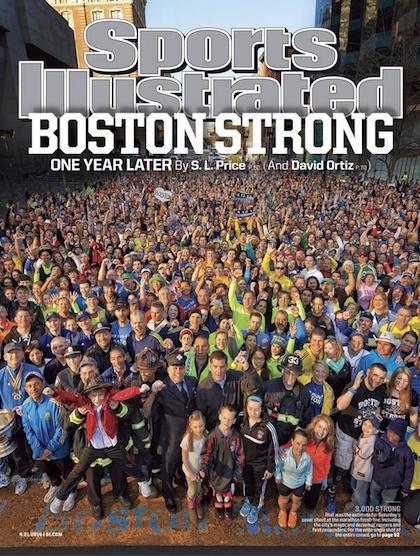
3. We Heal as the Marathoner Suffers   Maybe it’s a coincidence that I’m writing this on Good Friday. And I’m sure it’s sacrilegious to even allude to the comparison. But can any of us deny that we are looking forward to some kind of vicarious redemption on Monday when this year’s Boston Marathon is run. We want that day to be a beautiful, healing, national celebration of perseverance, resolve and community. We want it for the lost, the survivors and frankly, for us. Those 36,000 runners and the countless volunteers will do the work, but all of us will heal.

4. The Nameless Are Named   The best advice I got on running my first marathon was to write my name on my shirt, so that people could call me by name when I went by.   It was such a good idea that now it’s done officially on the racing bib, and the effect is the same: an unsinkable buoyancy provided by that three seconds of personal connection between two people who are there for each other in that one present moment.   It’s much different than joining a chorus of cheers for a team—it’s personal, it’s fleeting and it’s a reminder that each person matters to someone, even if only for that one moment you share together.

I suggest we now go further—let’s have spectators wear name tags so that the grateful marathoners can thank them by name. Let the official campaign begin.

5. I Can Earn (or Buy) My Way In     There are two ways in to the Boston Marathon—qualifying with a fast time in another marathon or raising a sufficient amount of money for a sponsoring charity.   In either case, the registration fees are pretty steep. Think about that. Can you imagine if they put that rule in the NFL next year? “Ok, men. You aren’t getting paid, but we will let you play for the Patriots if you go out and raise $10,000 for Children’s Hospital”.

The marathon goes beyond amateurism for all the but the elite of the elite runners. It isn’t like other major professional sports that generate jobs but basically suck ticket money out of the breadwinners of a city and funnel it to owners and millionaires who have made a career out of sports entertainment. Instead, a well run urban race pumps millions into charities through people who pay for the privilege of participating and provides an incredible human spectacle of hope and honor to the throngs that gather to freely watch the event.

6. The Best Stories Are Unseen    For those of us who will show up on Monday or watch on television, we will see an incredible display that will last a few hours.  It’ll be great and we’ll be all high fives and fist bumps with a healthy dose of goosebumps.  But please, let’s not kid ourselves.

The real stories about that marathon will be told quietly in the kitchens and car rides and restaurant booths one-on-one between runners, spectators and all those who are interested in knowing what it was all really about.  The race is really run on all those dark mornings and bone-chilling evenings of training that took place when we were asleep or complaining about how cold it was when we walked to our cars.  We will see the tip, but the iceberg of achievement and sacrifice and ascendant spirit happens in small, unseen moments that are only known by the runners themselves.  That’s why they’ve already won when they line up in Hopkington– and why it matters to be even a tiny part of it.  Why it won’t be the same without each and every one of those hidden stories.

So, marathon. I’m not saying we are getting back together. But I will be watching on Monday.  Call me.


The Worst Person To Run With

Who are the people you really don’t like running with?  I’m sure we can all come up with our own lists of fellow runners with annoying habits that take a little bit of the fun out of our runs from time-to-time.  Panters, sweat-sprayers, don’t-wash-the-shirt-enough-guy, one-steppers (who insist on running one step faster than you want to go), blah-blah-blahers.  I could go on.

But if you are like me, the worst person of all to run with is the one that’s not even there.

IMG_6494
How often do you bring along The Worst Person To Run With?

It’s the person we end up having imaginary, contentious conversations with as we go along and not even realize they are dogging us, sapping us of the gentle joys of being alone and running.

Maybe it’s always a specific person, someone who is close to you, but always finds a way to get under your skin.   Or someone you just can’t seem to get close enough to– who always has a way to keep distance between you. Or someone who has perpetrated some great injustice upon you. Or one that won’t forgive your trespasses against them.

Or it could be the red Dodge Ram truck that blocked your lane and forced you to miss your exit this morning, the grocery store that didn’t have enough checkout clerks and caused you to be late for a dentist appointment, the person who designed the beverage holder that won’t hold your coffee mug.

The Worst Person To Run With is like an earworm.  They show up uninvited and stay as long as you let them.  Often they stay with us longer than we realize, just sitting there on our shoulder, repeating the same arguments, whispering the same doubts, pointing out the same mistakes, vexing us.

I am not usually one to rely on music to get me through runs, but listening to almost anything is better than listening to this person over and over again. What’s worse is that running with this imaginary person in your head makes dealing with the real person even harder in real life, because your body feels and remembers the pain of that contentious conversation that never took place.  You’ve secretly made The Worst Person To Run With even more oppositional to you with every stride you’ve carried them.

IMG_6783
When The Worst Person To Run With shows up, they stay as long as you keep talking to them.

The upcoming holiday season ramps up the volume of so many of our relationships, it’s a natural time to end up taking along The Worst Person to Run With on our precious runs.

So let’s see if we can give our shoulders a rest this season.

Perhaps, like I try to do when I realize what’s happening, you can leave The Worst Person To Run With by the side of the road,  and take the rest of your run free from distraction.

And get back to The Best Person To Run With. Yourself.

One-by-One, Run-by-Run

Who have you met on a run?  What have you learned about them? Yourself?

I have a regular running partner who I’ve been running with for about 10 years or so.  It’s a partnership I take for granted, but one I’ve come to rely on.  We have an incredibly satisfying non-run kind of run.  By that I mean no talk of PR’s or speedwork or anything to do with running at all.  Just the kind of meandering conversation that goes on for miles without either one of us really noticing how far we’ve run.   Familiar, comfortable and the foundation that helps me do other, more intense kinds of training on top of it.

Over the past couple weeks, I got the chance to run with a few people that I had never run with before– which is pretty rare for me because of the patterns I’ve set in my training.

Since it was running that brought me to meet these new friends,  I knew we’d end up talking about running, and I found it curious to see where the conversation ended up with each of them.

I’ll just refer to them as The Trail Runner, The Yogi and The Surgeon.  And no, we did not run into a bar, although if we did, I’m sure The Surgeon could get a pharma company to pick up the tab if the Obamacare website isn’t quite up-to-speed yet.

With The Trail Runner, whom I met up with during the Runners World Half 10K road race, the talk was mostly about the companionship and therapeutic benefits that running provides.  Whether it’s on a long run through the woods (she does 50K runs for fun. Yes, I said fun) or just a run up Main St., she reminded me of how social this sport has become.  With big races, meet-ups and such a variety of running-related events,  we don’t have to be lonely long distance runners unless we really want to.  And when we want to be alone, running is still there for us, as the healing value shifts from talk therapy to zen.

IMG_0651
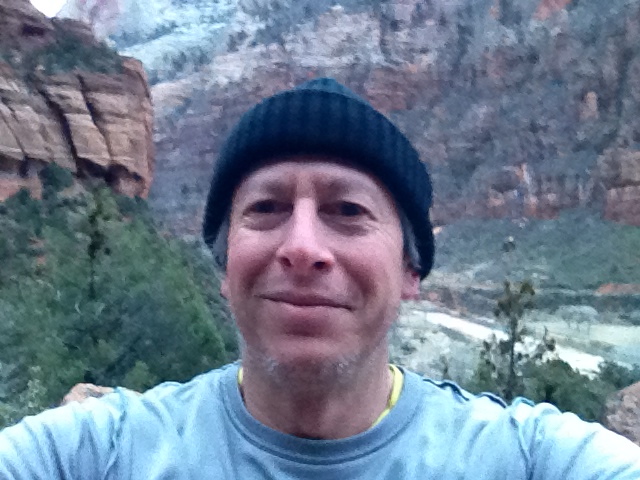
I like a good trail run too, especially when it is in Zion National Park.

The Yogi was the youngest of my newfound companions, in her mid-30s.  She reminded me of how a runner’s competitive nature can lead to a mindset that brings on injury.  She considered herself a reformed runner in that she no longer pushes herself to run through pain at the cost of her health.  She works with runners and athletic teams now and offered a very keen observation about why yoga can help runners live better lives.  Runners too often try to disassociate themselves from their bodies in the push to run through pain, whether to hit training goals, just to be stubborn or because of something closer to addiction.

As runners, we are set up to be “versus” our bodies, trying to push them beyond where we are comfortable. Yoga also pushes us, but it pushes us into our bodies.

Yoga puts us back in touch with our bodies by helping us understand our contours, strengths and resistance.   I’ve done both and believe that the best of both worlds is to approach the excitement and competitive spirit of running as a way to better understand my body, not to try to impose some kind of domination over it that leads to a breakdown.  And yoga helps me do that.

IMG_6948
Yoga helps break the bonds that keep me feeling isolated and brings me back to my body.

The Surgeon was perhaps the most humble about running’s role in his life– as he was just thrilled to have the time on a Sunday afternoon to take to the trail as our kids rode their bikes ahead of us. Even though he had to carry a backpack with his phone and supplies because he was on call for surgery, he ran with ease and relaxation.   He took whatever running had to offer and made few demands on it, maybe because there were so many other demands on him and his work.

Our talk veered into healthy habits and eating and he expressed how difficult it is to watch his patients fail at making relatively simple lifestyle changes that could ward off life-threatening concerns like diabetes and heart disease.  “I’m good for another 60 years, right doc?” was the kind of thing he’d hear when he was doing bypasses and putting in stents.  That kind of attitude might be good for his business (if the afflicted can get to him in time), but he was still sad and perplexed about seeing that kind of attitude keep people from living full and active lives.

I’m grateful for the chance to get such an interesting collection of people to run next to and reminded of what a great venue that a run can be to get to know someone a little.  Better than a cup of chili or a glass of gin (you know who you are), in my humble opinion. But then, as a running author, maybe you’d expect that from me.

Yet The Trail Runner, The Yogi and The Surgeon each found something in the runs, too, I’m sure.  And I hope to be able to share more from them and others that I happen upon during my runs.

Running can be an awesome power in our lives: to help us connect to others, to help us connect with our own bodies and to help us connect to health and longevity.   May we not only manifest that power in our own lives, but serve as ambassadors of the sport to whomever we meet one-on-one, run-by-run, at any speed.

10 Awful Things I Love About Marathons

So we are almost exactly halfway between the two big east coast marathons, Marine Corps Marathon (last weekend) and New York City (this coming weekend).

Just between the two little old-fashioned footraces, more than 78,000 of you will subject yourself to a level of physical, mental and emotional cruelty that, if not for the fact that you do so willingly, publicly and at great personal expense, would be expressly banned by the Geneva Convention.

And yet, as I was out on my little wimpy, happy 5-mile run today, I couldn’t help thinking about why the race, despite its torture, is so compelling.

So here goes, 10 Awful Things That I Love About Marathons.

10.  It’s like watching a train wreck in slow motion

The pain and distress the race causes happens over the course of hours, scattered over the map of the city.  Usually human carnage of this magnitude is horrifically centered in one heap, which is too monumental to grasp.  Here we have the luxury of watching the pain and agony unfold slowly, as the happy faces of the first few miles morph into the strained grimaces of the final few.

9.  Zombies take over a city

photoslice2

When zombies finally do appear in our streets and claim our nation, there will be a strange sense of deja vu for anyone who has witnessed a major city marathon.  The stoned faraway looks and the staggering but indomitable pace of the streaming multitudes will be nearly identical.

8. We get to stare at you, in your underwear

Usually, when we stare at people who are so vulnerable and thinly clothed, we are considered impolite and potentially perverse. During a marathon, we are considered supportive.

7. We feel like you look

On many days, the hard knocks of life have us feeling beaten and beleaguered.  But we can’t show that side of ourselves, or we will be pitied and coddled and possibly stripped of our responsibilities at work.   So watching you cheers us up as we identify with your pain and acknowledge that maybe we can get through our own sh*t afterall, seeing how you keep going no matter how terrible you look. And you do.

6.  There’s a finish line

You have a finish line to end your pain and signal your achievement.  We are not so lucky as we struggle with the ups and downs of our lives. We just go to bed and try again tomorrow.  But you remind us that struggle can have purpose if we let ourselves believe that what we are doing has some importance.  We need you to keep going to give us hope.

5.  Watching the clock

The worst part about running my first marathon was the incessant worry about whether I was going to hit my time goal. The clock doesn’t pause and doesn’t compromise.  And yet that time lasts forever on your race history permanent record.  The tyranny of that disciplines you to push yourself.  We can sit idly by and see you have to be judged by the harsh measurement of the clock, while ours seemingly stands still. No one will judge us today like the clock will judge you.

4.  It’s personal yet public

There will be 78,000 reasons and 78,000 stories and 78,000 inspirations behind the runners that will complete these marathons. Many will cry upon finishing and not (just) because their nipples are bleeding.  Each person’s struggles and achievements and failures are intensely private, forged in the hours and hours of training and the singular dedication to preparing for this day.  And yet, there it is.  Right in front of our eyes.  Every single step of those 26.2 miles will be publicly witnessed by thousands of people. We will know if you make it or not.  We will know when you walk. We will know if you cramp, cry or crumble in a ball.  That kind of transparency is the ultimate curbside reality TV.

3. You are all moving in one direction

Seldom in life do so many people simultaneously agree to move in the same direction for so long.  If you randomly selected 78,000 people and put them in one place can you imagine any other scenario where they would virtually all end up in the same destination via the same route?  I fear that the enjoyment of this coordinated and mutually beneficial movement makes us all socialists.  We may be in Glenn Beck’s next book.

2. It’s like the world’s largest Stations of the Cross

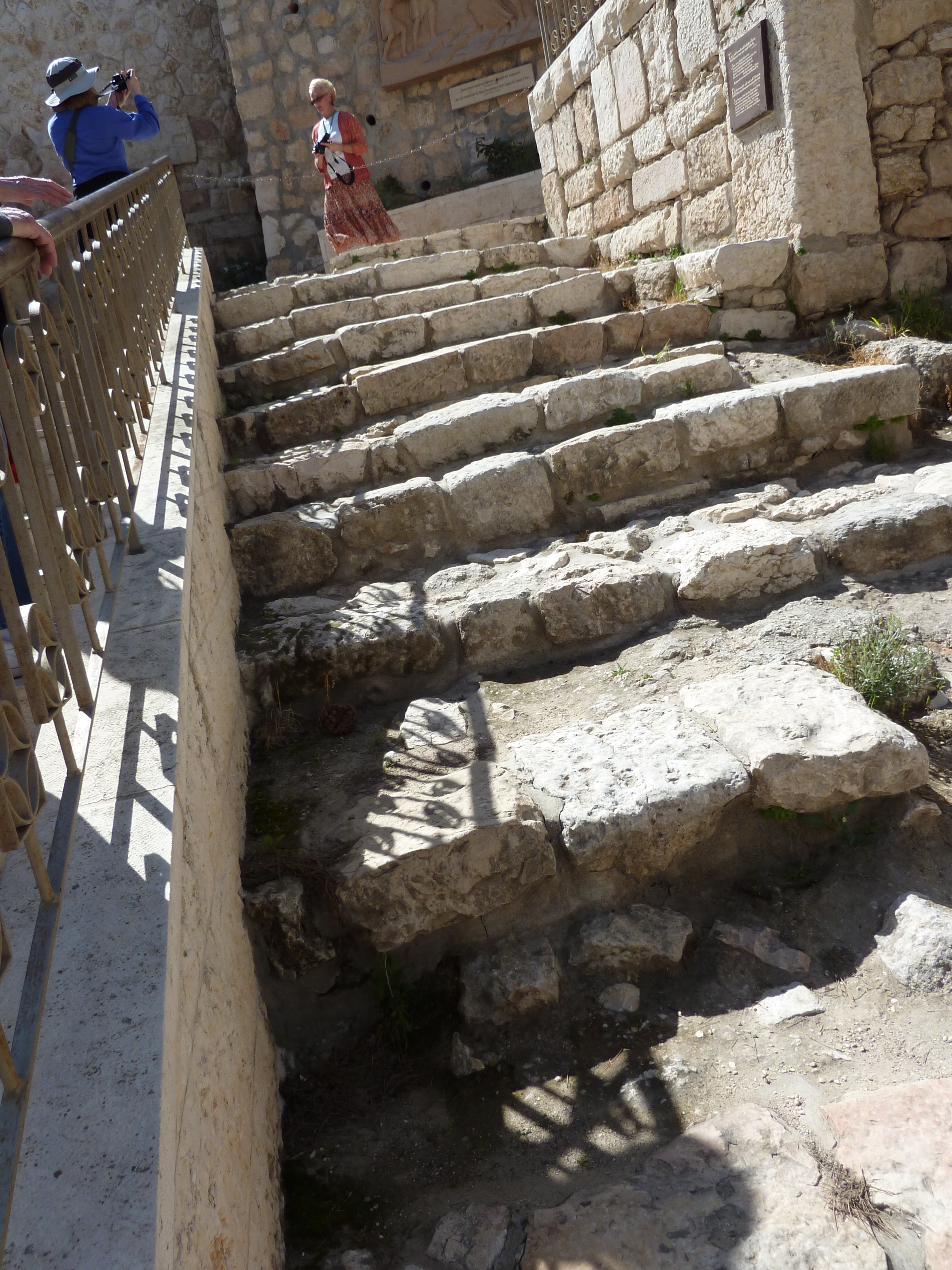
STEPS ON THE PATH
May each step take you to a higher place

With all due respect to people of all faiths, this Catholic boy can’t help thinking of the marathon as tracing some of the steps of Jesus as he was led to his crucifixion.

Your clothes (ie. extra sweats and garbage bag ponchos) are taken away. You may fall (or at least stumble).  You may see your mom (even if only in a ecstatic vision accompanied by polka music). You will get help from strangers (who oddly know your name). Women will weep as you pass by (you will look that bad). You may fall again– and again. You will wipe your face (save that towel!). You will be offered water, and perhaps occasionally if they are out of Gatorade, hyssop on a reed.  I only hope you have a more dignified finish line to mark the end of your day.  Although come to think of it…

1. The first guy who ran it died after finishing

So for Pheidippides’ sake, you gotta kinda know it’s not a great idea.  Sort of like the first guy who ate poison berries.  And yet, you go on and somehow survive.   In other words…

When life gives you poison berries, make a smoothie.

Drink up, marathoners.  Congrats and good luck.

The Other Half of the Runners World Half

I hope to see some of you this weekend at the Runners World Half and Festival in Bethlehem at Steel Stacks.    The weekend is more than just races and the huge expo for running gear. Here’s the schedule for the other half of the weekend, the seminars and talks on Saturday.  I’m entered in “just” the 10K, which no doubt will be filled with runners just passing through on their way to the coveted hat trick hat (running the 5K, 10K and half marathon).  Technically, I did complete the hat trick last year in what I’m pretty sure was the fastest time of any finisher.  However I did so by running the half and driving the pace car in the 5K and 10K.

IMG_9835
My fastest 5K and 10K ever.

Some of this year’s highlights that you will not want to miss are below.  Get here on Saturday for some of the best speakers in sneakers.

Noon   My track coach Budd Coates will be talking, with Chief Running Officer Bart Yasso, on “What Every Runner Should Know” .  Perhaps Bart will mention what I’d like to know: how to get paid for doing what he does.

Also at noon, two very well-informed nutrition experts who helped me in my Mulligan Mile will be part of a panel on fueling for peak performance.  It’s sold out, but a few stand by seats should open up and I hope to be in one of them.

  • Joanna Golub – Runner’s World Senior Editor, Nutrition
  • Pamela Nisevich Bede – Sports Nutritionist and Runner’s World Columnist

1:15  My brilliant editor Tish Hamilton is leading a panel with Olympic hero (and erstwhile kids’ game show host) Summer Sanders, who Tish assures me is as every bit as charming and smart as she is beautiful and talented.  The panel will discuss the unique challenges and joys of women’s running.

There’s also seminars on running with dogs, injury prevention, pregnancy and running and more along with two inspirational running flicks, including one on running legend Steve Prefontaine.

The evening wraps up with what promises to be the most riveting running talk you will ever hear, from Dave McGillivray, Race Director of the Boston Marathon.

runnersworld1
Hear what it was like to be the raced director of the most famous race in the world on the most memorable day in its history.

By the way, if you are looking for my book signing, don’t bother.  I am still working with my agent to put the finishing touches on the book development proposal.  Maybe next year you will be able to line up for your copy.  This year, just get your pasta and be happy.

Malcolm Gladwell and The Cinquino Scale

If you follow my work, you may remember that in four months last summer, I went on to lose 12 pounds, cut 1:21 from my mile time and [spoiler alert] run a 5:34 in the 2012 Fifth Avenue Mile, a time that surprised me most of all as I tell in my story, The Mulligan Mile.

Goliath and David
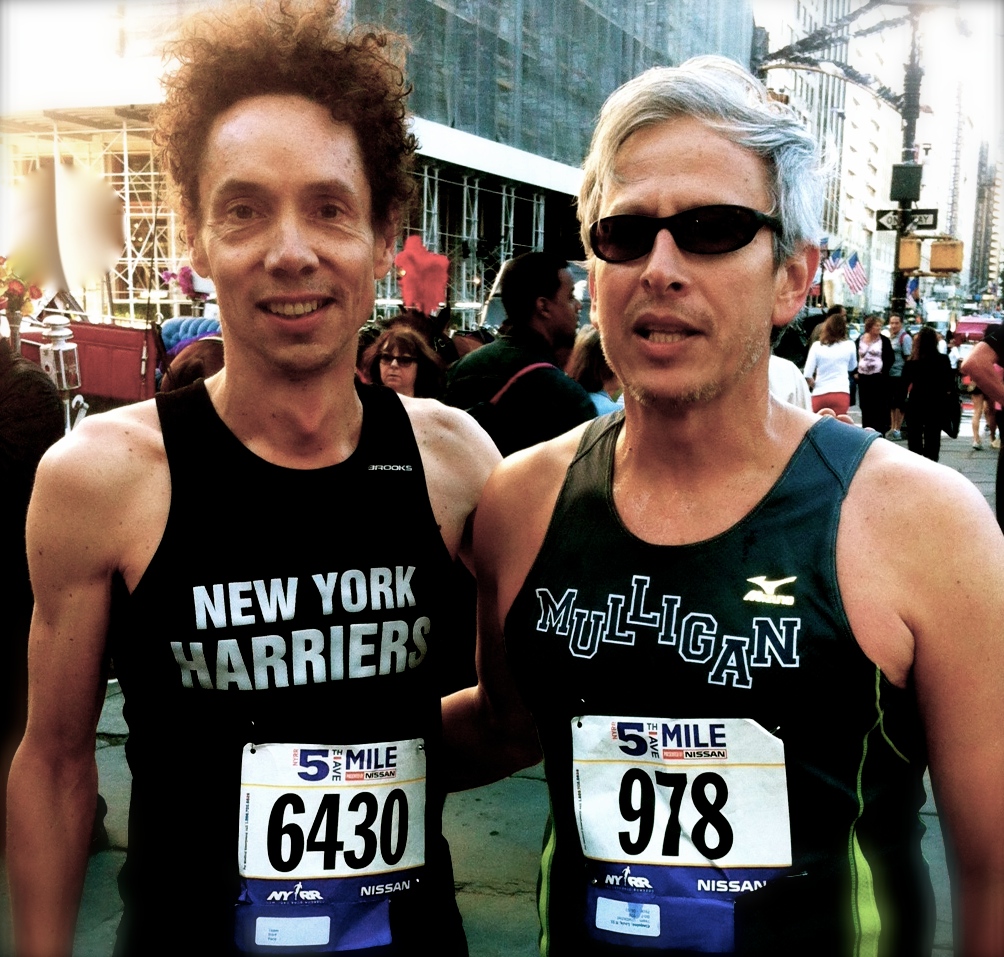
Which of these authors is David and which is Goliath? Malcolm Gladwell ran a blistering 5:03 in the 2013 Fifth Avenue Mile. Read on to see what I ran.

I knew this year’s result would be slower due to a litany of excuses I had registered in advance with my readers when I signed up for the 2013 race.  I mean, I could have just blamed Obama, since the car crash I got into on election night 2012 was clearly his fault.  But that was the easy way out. You deserve a better explanation than such an obvious scapegoat.

Yet perhaps I didn’t need to create such a long list of reasons. It all may boil down to one variable that, for me, encapsulated all the other, related excuses in one neat number, 10. As in ten pounds heavier this year than I was last year.  Of course a big reason for that is that I didn’t train as much or as hard as last year.  But with that in mind, my weight may have been the best measurement of just how much training I had done this year and my prospects for success.

I did my best to try and find a reliable source to tell me definitively the relationship between weight and speed.  I know that every pound lost is speed gained, but how much?    I found this article in Runners World that plausibly suggested that losing 10 pounds would net you 20 seconds per mile, within some undefined reasonable range.

So that would mean this year’s time, with everything else being equal, would come in at around 5:54, reflecting the additional burden I had to carry for those 20 hallowed blocks along Central Park East.

I’d be thrilled to take that, given that I still hadn’t broken 7 minutes in the little training that I had done this year.

on5th
Notice the mulligan man’s feet are not touching the ground.

The race this year started out similar to last year’s in that I scorched the first quarter mile and was only a couple seconds behind last year’s pace at the first split.  After that, I completely lost track of the clock until I looked up in the final 40 yards before the finish line.  Last year, I checked my half-mile split (what i reported as 2:59, but afterward I realized that my real, chip time, was probably 6 seconds faster than that due to the time it took me to get to the start line).

But I didn’t need a clock to tell me this year was different.  I tried the same racing technique– zero in on the back of someone ahead of me and try to pass him.  Last year, it worked, I was passing people left, right and center.  This year, not so much.  Turns out that setting the intention of passing someone isn’t the same as actually passing him.

You still need the legs– and the lungs.  I had neither in the same capacity any longer and the backs of the guys in front of me just kept going and in fact, were joined by more and more backs of guys passing me in the final 600 yards. No one seemed to pass me last year.  But this year, I was passed over more times than celery sticks on a buffet table.  I kept pushing as best I could, but at one point I caught myself thinking about the finish, just wishing it were upon me. And it wasn’t.

My lungs were clenched, my legs kinked. I was moving backward. But somehow when I looked up at the clock at finish line, there was still a 5 in the first position. As I drew near it and with that auspicious number drawing me in, I staggered home just before it turned over to 6.

Which of these authors is David and which is Goliath? Malcolm Gladwell ran a blistering 5:03 in this year’s Fifth Avenue MIle.

My lungs immediately seized up and I could barely talk above my cough for the next 30 minutes, even when I stopped to chat with fellow writer and age 50 – 59 competitor Malcolm Gladwell, author of The Tipping Point and the new David and Goliath.  Gladwell kicked my mulligan ass with an incredible 5:03 befitting the former Canadian champion runner interviewed in the same September 2013 Issue that my story ran.

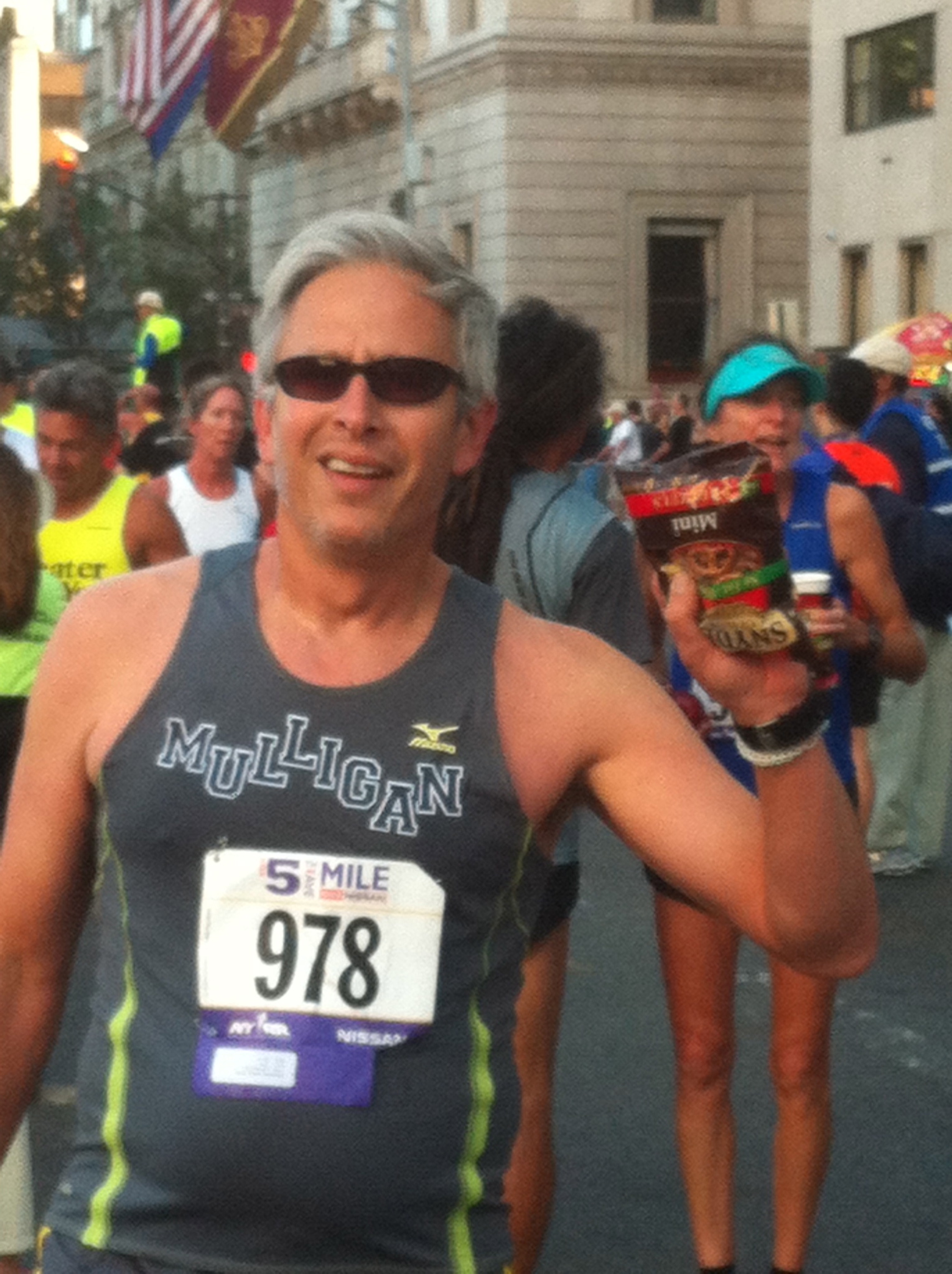
So I ended up officially with a 5:56, plus 22 seconds from last year– almost to the second what was predicted by my 10-pound weight gain. (Since he ran about a minute faster than me, does that mean Gladwell must weigh about 150 lbs?)  Now I have to eat my pretzels.

IMG_2076

You can keep your Yasso 800s to predict your marathon times.  I’ll just use the Cinquino Scale to let you know what I plan on running in my next competitive mile.

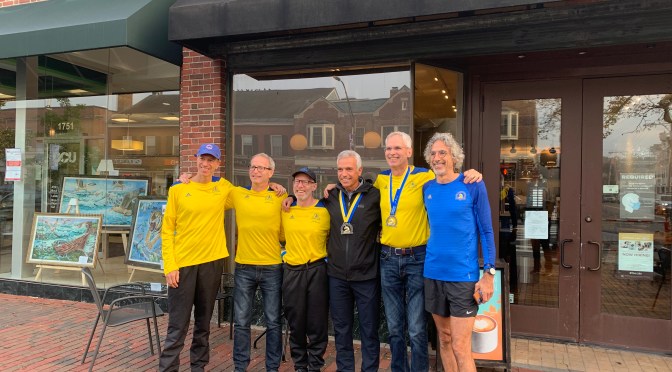
Congratulations to three fellow running friends from the Lehigh Valley on their fine races that day, too.  Megan Hetzel (@megrunnergirl) who won the women’s media race.   Pictured below are Jamie Gottschall, who ran strong coming off a series of troublesome injuries,  and my running coach Budd Coates, who placed second in the men’s media race with a time that would have won our age heat if he had chosen to compete against Malcolm and I.  Maybe next year, coach.

IMG_2078
Jamie Gottschall and Budd Coates. Lehigh Valley Proud.