

See my article in September issue of Runner’s World to discover the romance of cross country running.
See my article in September issue of Runner’s World to discover the romance of cross country running.
It’s not the trail. It’s not the road. Cross country racing is the middle way. Something else entirely. And it’s good.
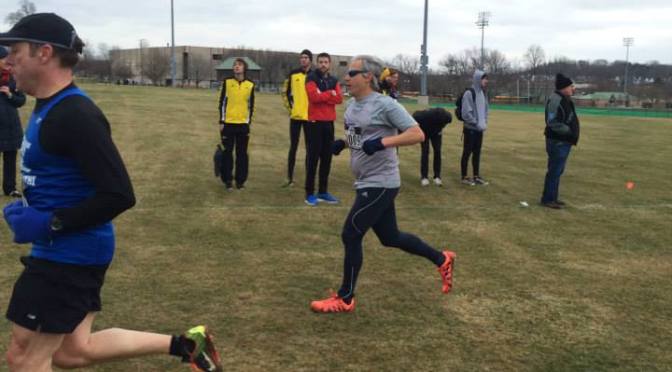
I ran the 2014 USATF Cross Country Club National Championships at Lehigh University in December and made it a point to talk to as many runners as I could to try and find out why they were running a cross country race.
You can see from this picture why I ran: the snazzy uniform from my team, Lehigh Valley Road Runners, not to mention the excuse to buy bright orange spikes.
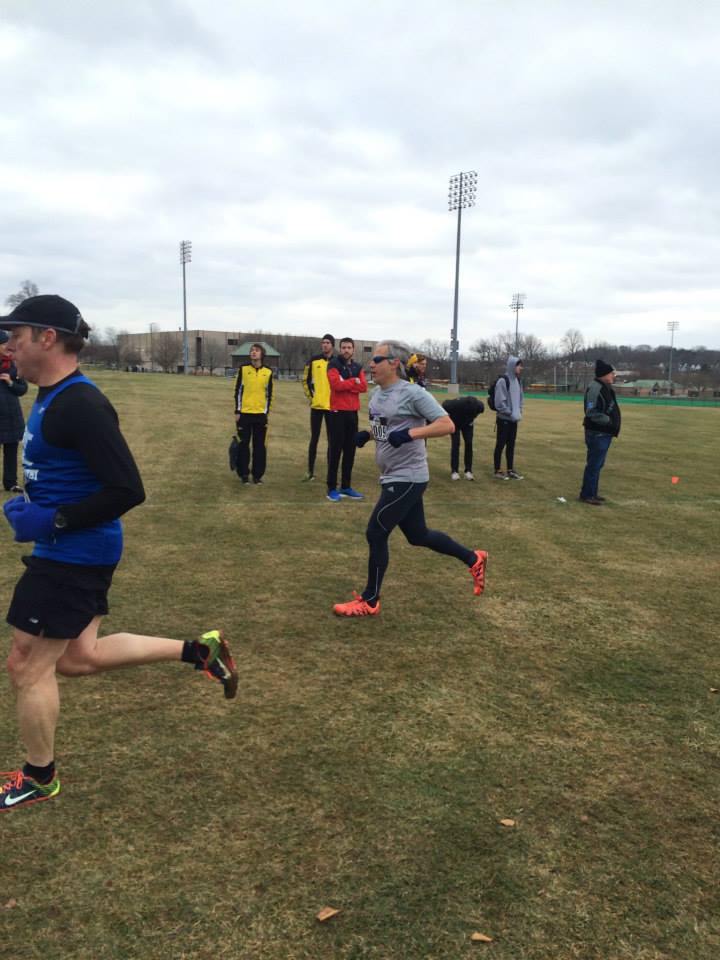
The runners I met at the meet were veterans of trail and road running who find cross country as either a safer alternative than rugged trail runs or as a refreshing break from the pounding of the road.
“There is a fear of the unknown. Of the unpredictability of cross country,” said a female elementary school teacher and member of Colonial Road Runners in Williamsburg, VA. “But I’ve been on trail runs and those are harder. I trip all the time on trail runs. This was all groomed and easier to run on,” said.
“Trail runs have more hazards and are more technical than cross country. Do I want to twist my ankle on a trail?” I hear from a member of the Atlanta Track Club. “At road races people are just running for faster times.”
“But this cross country race was different,” she explains. “I was going back and forth with a woman as we ran. And finally she just yelled over to me ‘Go get it,’ and we both took off. We were really going at it, but it was supportive. It was total fun. “
I also heard from Sasha Blum, a top 10 masters finisher (2013 Club Nats in Bend, OR) who found that same kind of competitive spirit, as well as blessed relief from the roads. Lord knows she needs it. When I heard her speak at a roundtable the night before the race, she was introduced as a mother of five under the age of 8.
“Cross country is much easier on my body than road racing is,” she said to the group. Yet, there’s nothing easy about the races. It was at cross meets where she found the racing atmosphere she craved. “I love training with other runners on my team, and the pure competition of the race. There’s nothing else like it.”
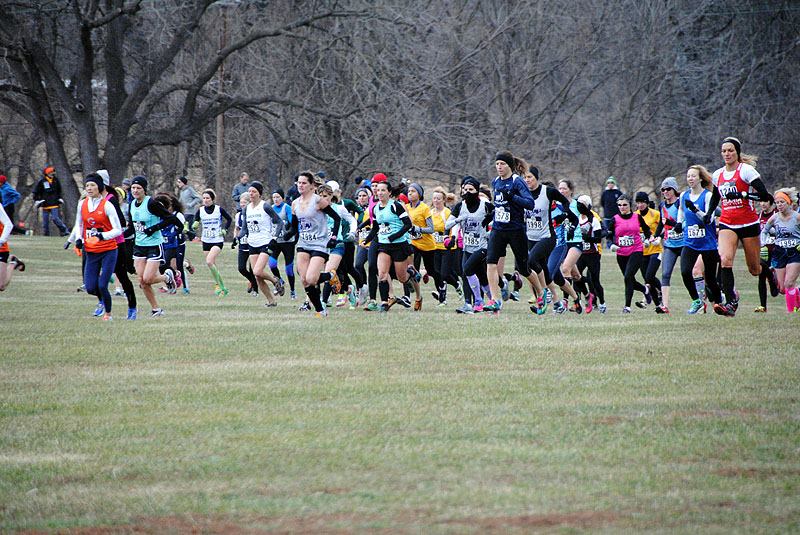
So now is the time for you to try a cross country race– and here are three options to getting signed up.
PHOTOS from LVRR Facebook Page: Jill Forsythe
One story stands out when I recall my weekend at the 2014 USATF Cross Country Club National Championships (See Runner’s World, September 2015 issue for my feature article on the race, my first cross country race since high school). The story was less about running, and more about rewriting the personal stories that can haunt us.
I met Rich, a CPA who runs for a club in South Jersey, at the rowdy, drunken after-party that the local hosts of the USATF event generously threw to celebrate the run and announce the awards. Booty was slapped, pots were stirred and kegs were killed in the making of this party.
But when I approached him, Rich was looking very content to be standing off by himself, sipping a drink and taking it all in. It turns out that, like me, Club Nats was Wright’s first cross country race as a “grown up”. His last race was during senior year of college at Glassboro State, where he had left the sport heavy with disappointment.
“Oh, did you have a bad race?,” I asked, thinking may have been his own kind of Mulligan Mile.

“No. I had a great race. A fantastic race. Best I had ever run,” he said to my surprise.
Rich recalled how proud he was of the race he had run at regionals at Kutztown University, roughly a marathon’s distance from the Lehigh course where we had run on this day. Even better, so did three of his teammates. In a track relay, that’s enough.
But not in cross country.
“The fifth guy,” he smiled wistfully. “It just wasn’t his day. It was terrible. We didn’t make it. I was crushed. I literally took off my spikes that day and hung them up on a hook. Never ran another cross country race.”
But with this year’s race so close to home, Rich knew what he had to do. He actually dug out his old college jersey, and slid it under his running club’s team shirt and set out to run that bad race right out of his memory. What’s more, he was in touch with several of his college teammates, who did the same thing, representing other running clubs. Under their respective jerseys beat the true hearts of cross country runners.
“We were all so pumped up about finally doing another race. It was fantastic. “I loved everything about it. Every little bit of it,” he says of the race. “The spikes, the start. The uniform. Everything.”
Look for the September issue on newsstands now and arriving in subscribers’ mailboxes. An online version of the article will be available in a few weeks, so subscribe to TakingMulligans.com and you will be notified when this occurs.
This year, the Club Nats event is being held in San Francisco on December 12. For details on the race and to register, click here.
My upcoming article in Runners World will tell you what it was like to run in the 2014 USATF Club National Championships, my first cross country race in 35 years. But let me give you an advance hint.
The best part of running cross country isn’t the race itself—I mean there is only so much fun you can have when you are anxious, pushed to your physical limits and fighting for your dignity against fanatical men in spikes.
Let’s put it this way—no one is wearing a Turkey costume or carrying a POW-MIA flag in this race just to be seen. They have traveled a great distance for one reason: to beat you. To leave you muddy, tamed and irrelevant. To make your team sorry they brought you in the minivan.
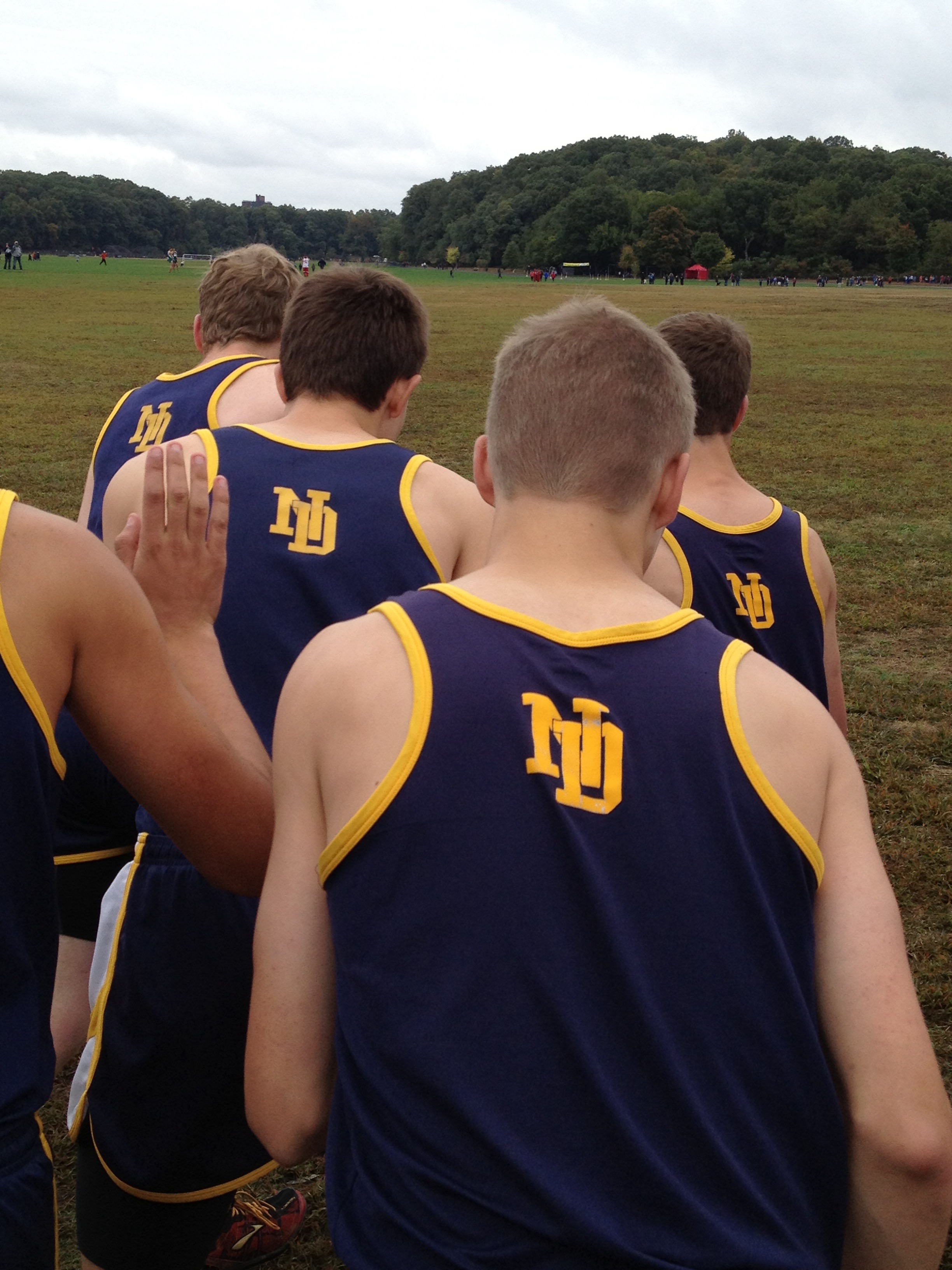
Yet despite this dog-eat-dog mentality (or because of it?) running cross country is maybe the most alive you will ever feel as a competitive distance runner.
If you thrive on that kind of competition—and miss racing that close to the edge of insanity—then get yourself signed up immediately. This year’s Club Nats race is in San Francisco on December 12. Click here for information on the race and registration. Runners will be crushing each other like grapes on an I Love Lucy vineyard episode.
For me, the best part of cross country was the simple beauty I found in training that got me out of my rut and into the woods. I loved how the sport bonded me to a group of like-minded, hardy souls who were willing to unquestionably band together and suffer the consequences of that association for better or worse; for uphill and down; for grass or gravel. And I got a uniform.
As a guy who played on team sports from his early Pop Warner football days, running has often felt like an outsider activity. Something I did to escape, to build my own strength and endurance, to test my own will. Races were mostly just interesting ways to measure my progress, banter with my buddies and appraise the latest in tight-fitting fashion wear.
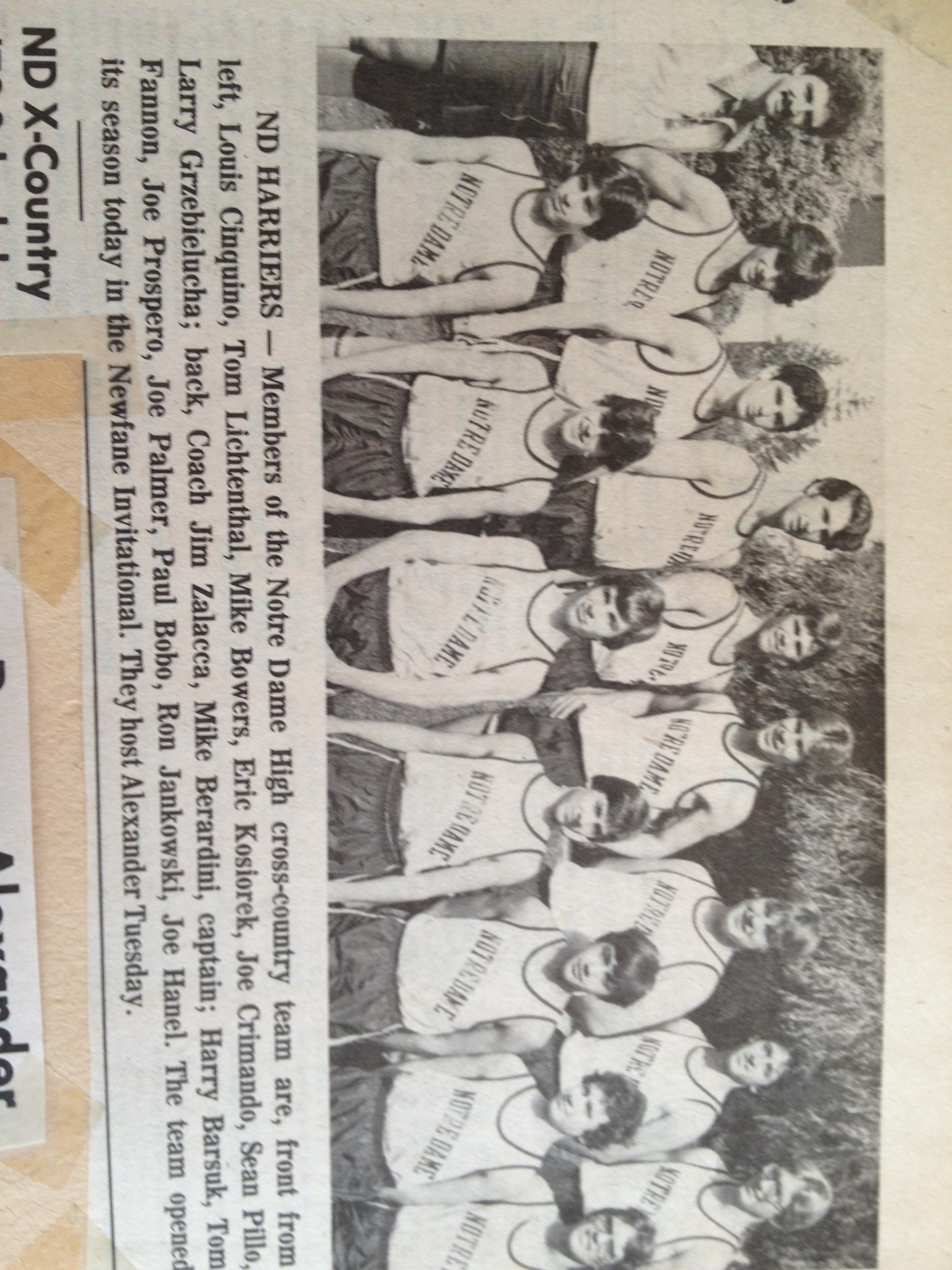
Not since my high school, cross country and track teams had anyone given me a team uniform with the expectation that I would do something important while wearing it.
And it’s not just me.
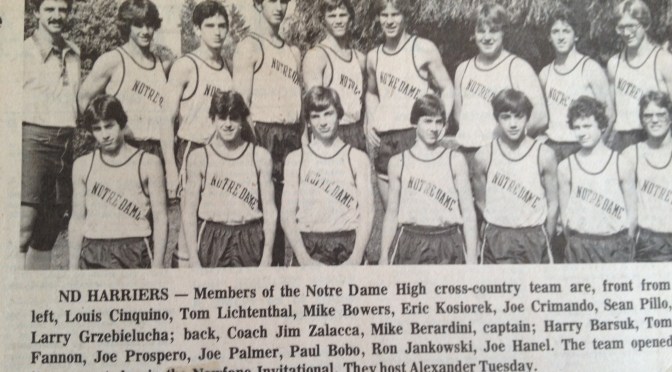
The shared love of team drives the sport at every level, including a boys and girls high school team from Orchard Park, N.Y that I met last fall. At the time, we were in the same New Your City subway car after I watched my old high school team, Notre Dame High School (Batavia, NY) compete in the Manhattan College Invitational at Van Cortlandt Park, the capital of American cross country racing.
“How are the cross country guys different than the football guys?”, I had addressed to the girls on the team, as I pondered what girls in my class may have thought of me back then. Laughs all the way around. A few whispers and giggles into each others’ ears. No one wanted to speak up. Except the boys, of course. “We’re smarter!”, exclaimed one boy.
“Smaller arms,” I heard from a girl behind me. More laughs all the way around.
There was apparent unanimous agreement that they preferred cross country to track. “It’s not just going in circles like in track,” said one of the more logical boys. “We have parties together with the girls every week,” said a wiser one, with noticeably greater enthusiasm. “You can’t not love cross country!” he added. His English teacher may have not approved, but he had found his tribe early in life and was loving it.
You think this is just a kid’s game? You couldn’t be more wrong. Masters runners, including athletes who have already tasted running’s greatest rewards, are lifted by the spirit of a cross country team. “It was the best team experience of my life,” said Amby Burfoot, who was a member of the Wesleyan University track and cross country teams when he won the Boston Marathon in 1968 (and famously, at least in the legend that I heard during my daughter’s campus tour at Wesleyan a few years ago, attended class the next day).
But the team that Amby thinks about as his greatest experience wasn’t at Wesleyan. And that was no ordinary team– it included future fellow Boston Marathon winner Bill Rodgers and Jeff Galloway, one of the most famous running authors and icons of the running boom. For Amby, his dream team came than 40 years later than that.
“It was an over-60 cross country team that I ran Club Nats with a couple years ago. We were all cut from same cloth. Brothers competing as one in big national meets,” he explains. “Add to that, knowing we have all shared running for so long in our lives. How much running meant to us. And at that age, at least one person is always hurt. Everyone trying to help each other. Being there for each other. You overcome so much and it is a very powerful team experience.”
To read more about the love of cross country running at any age, get your copy of Runners World on August 4 when it hits newsstands across America. The online version will be available several weeks later through a link here at TakingMulligans.com
Early on in my training for last year’s USATF Cross Country Club National Championships, I began to realize something was different about the sport. But I couldn’t quite articulate what it was.
The event was held in my adopted hometown of Bethlehem, PA on the campus of Lehigh University in December. To help prepare for the race and to better understand what goes into the training of a collegiate cross country runner, women’s track and cross country coach Deb Utesch, invited me to a tag-along for a practice run on the Lehigh course.

Now this is not just your typical cross country course. The course, at the Goodman campus looking out on South Mountain, holds a unique place in American running lore. It was the site of the 1979 NCAA Men’s Cross Country Championships, thought by many to be the greatest field in collegiate cross country history– – and quite possibly the most historic national sporting event ever held in the Lehigh Valley.
In the race that day was a field of runners that had already set or would go on to break the half-marathon world record (Michael Musyoki), the course record for the Fifth Avenue mile, which is unbroken to this day, (Sydney Maree), and the American records in the 10,000m (Mark Nenow), 3,000m (Rudy Chapa) and 2,000m (Jim Spivey).
And those guys weren’t even close to winning.
That’s because the field included the defending NCAA champ Alberto Salazar, who would go on to set the world marathon record not long after this day at Lehigh, his final college cross country race.
And Salazar, who came in second, wasn’t even close to winning.
The title went to the indomitable Henry Rono, who wasn’t just the best American college runner of 1979, but singularly, the world’s top distance runner of his day.
How good? He arrived at Lehigh with four different world records that he had broken in an unparalleled span of 81 days. He beat Salazar by a full 8 seconds.
Ed Bosch recounts the race in this excellent blog post from MileSplit.
The Lehigh women’s team I ran with didn’t concern themselves with all that history. They were more intent on the present moment: preparing for the Patriot League Championships, which were less than a week away.
They generously took turns slowing down and running with me for a stretch, sharing their thoughts about their running careers and what cross country meant to them. These women were dedicated and hearty. Real runners, committed to their training and tougher than I was or ever would be.
What made cross country so compelling to them?
“It’s so raw,” said one team member as we previewed the Club Nats course, the same one that they run their meets on. “It’s not about hitting a time. It’s just, ‘get out there and go’.”
I heard this over and over—how pure the sport was and how it was running reduced to its most natural and competitive. These women were a new of generation runner, but with an old school mindset.
Yet when I asked what was the #1 reason they liked cross country so much, it wasn’t the challenge of the course that I heard about most. It was each other.
“It’s a real team, not like the track team where everyone kind of does their own thing and then they add up the points at the end. “We all are in it together. We do the same thing, run the same distance.”
It’s that team experience that bonds them to the sport and keeps them committed to each other. “I have sciatica, but that’s not the kind of thing that would stop me. It’ll hurt but I can get through it.” Every single team member I spoke to told me of some kind of injury or painful condition that comes and goes.
“The toughest girls I’ve ever met,” explains one team member. No one wants to let her teammates down by giving up.
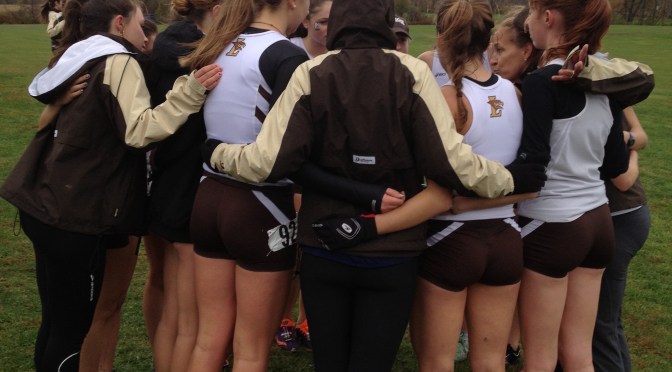
As we come back to the starting point and I catch my breath, I am glad that it is they who are doing the talking and me the listening. It is here that the toughness I witnessed in them gives way to something else. The team pulls together for a group hug and cheer before departing. For some, their next race will be their last home meet of their college careers.
It was then that it hit me what made these runners (and with them, the sport) different than the good people I run with at 10Ks and half-marathons.
“I’m gonna miss my team,” I hear rise from their huggy huddle, along with a chorus of giggles. “I wuv you guys!”.
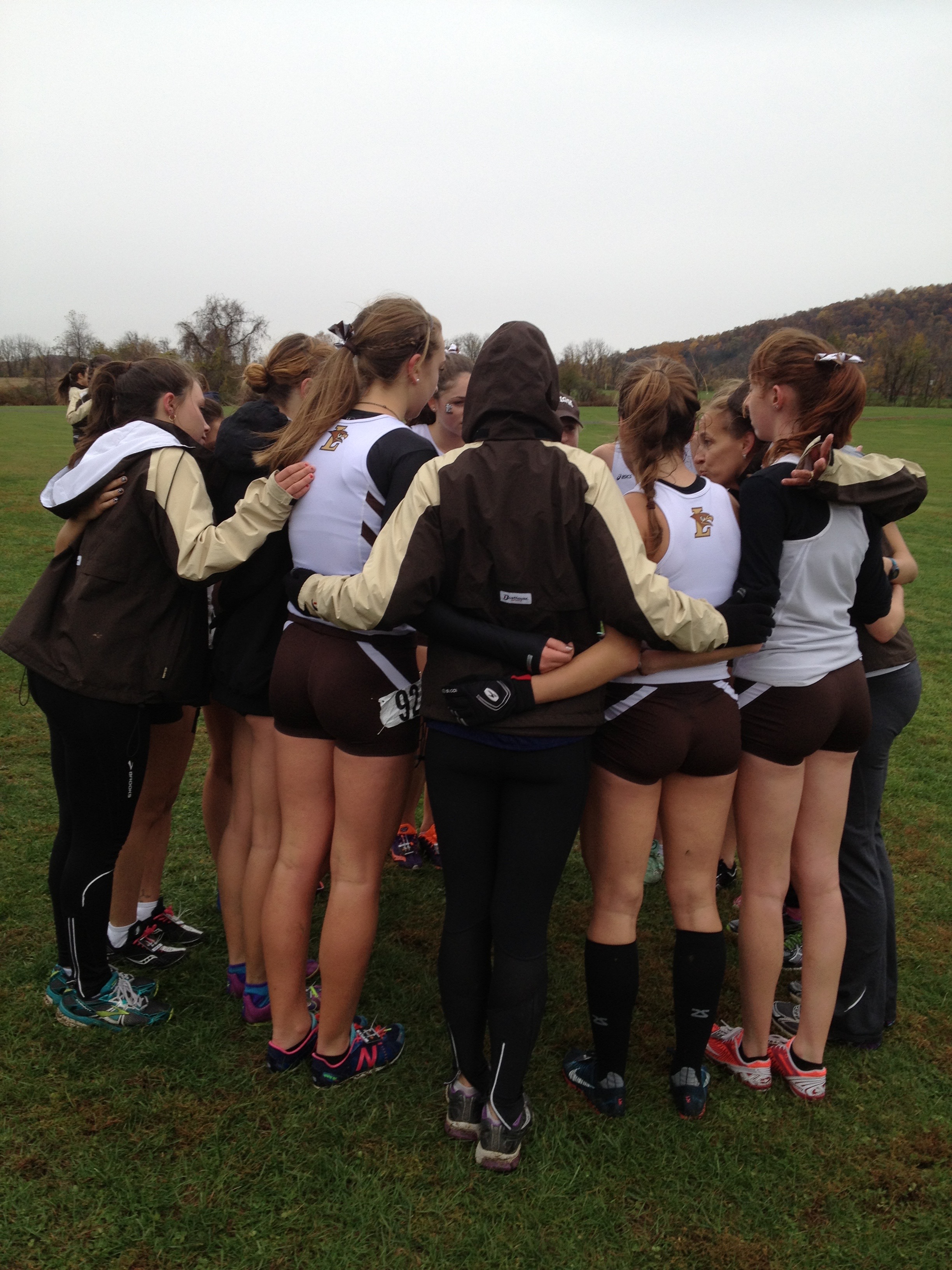
Seeing these stone cold, rock hard athletes melt like they were again little girls at a sleepover, it was clear why runners like these women endure the pain and cruelty of the sport while their college classmates are off partying and studying and partying. It’s not about the money (fewer than half were on athletic scholarships) or the fame (this isn’t beach volleyball). It’s not even about feeling good (every team member I talk to described some kind of injury or medical condition they had to overcome to keep running).
It’s about wuv.
My experience at the Club Nats meet, as well as an in-depth look at why the love of cross country races isn’t just for high school and college kids, will be published by Runners World in the upcoming September issue.
At the end of last year, I ran my first cross country in 35 years, the USA Track and Field Cross Country Club National Championships held in Bethlehem, PA.
I covered the race for Runners World and got to meet an incredible variety of inspiring runners, from the elite to the everyday, that came to the Lehigh University campus to participate in the event.
Over the next few weeks, in anticipation of the article being published in the September 2015 issue, I want to introduce you to my own little “cross country club,” some of the runners whose story didn’t make it into the Runners’ World article.
They are probably not unlike the nameless, numbered people that line up next to you in any race you will run this summer or fall. Keep this in mind as you wait in the crowd behind your next starting line with awkward anticipation, just wanting everyone to get out of your way: every runner has a story.
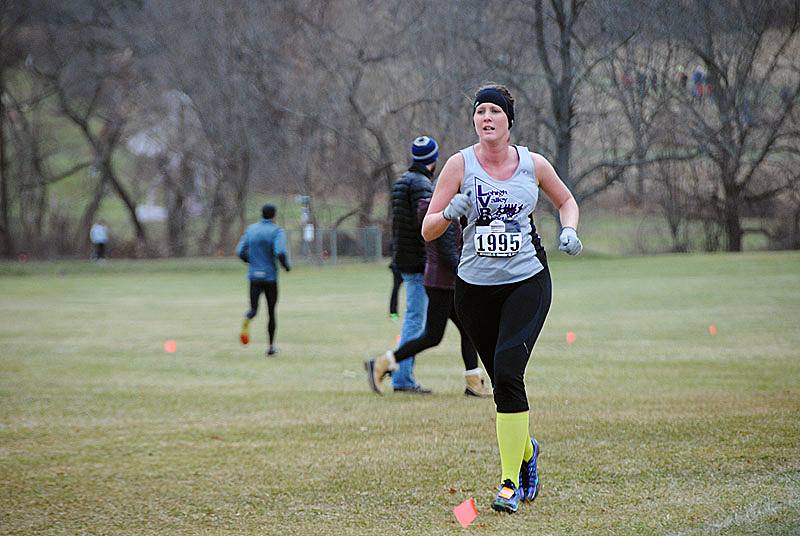
I have to start with Heather Hawthorne, a fellow member of the Lehigh Valley Road Runners, our local running group that both helped host the event and sponsored men’s and women’s teams in the races.
Heather ran the race, not for glory or ego but to simply recapture a little piece of herself that got put on the shelf during adolescence.
As an eighth grader, she was recruited to join the high school team.
“I was really excited to sign up, but my mom had other ideas,” shares Hawthorne. “She was a single mom and wanted her only daughter to be a ‘girly girl’, and running cross country wasn’t very girly.”
So though she’s run 3 marathons and the women’s open race is only a 6K, she’s a nervous bundle of energy when I talk to her the night before. Long held dreams that are about to come true have a way of doing that. “This is my chance to finally do it. I’ve waited so long to run this race,” she says. “To be that girl again.”
And she was. Heather survived the women’s open race. She did not come in last, which was one of her outcome goals, but let’s just stay Heather never threatened Laura Thweatt, who won the race for the second year in a row, in 19:14.41.
But competing at the front of the pack was hardly the point. Heather won plenty that day.
“Running Club Nats helped me let go of something I wish I had been able to let go of when I was younger, but couldn’t,” she said. “And it showed me how important it is to be patient, have faith, and pay attention. Sometimes missed opportunities have a way of manifesting again later on in life, as this did for me,” she said.
And Heather just keeps going.
On August 2, two days before my article about the Club Nats race will be published in the September issue of Runners World, Heather will be putting her toes in the water of her next “personal project” as she has come to call her athletic challenges.
She will be competing in her first triathalon, the Jersey Girl on August 2, in Long Branch, NJ. Heather’s race may be even more daunting, for a number of emotional and physical reasons. But I’ll let Heather tell that story herself another day.
What’s exciting to know is that a running race like Club Nats can not only provide a unique racing experience and invigorating physical achievement, but can also be part of a healthy psychological approach to personal growth and fulfillment.
What kind of emotional challenges has running helped you face?
At many points over the past three years, my mind has felt like an episode of Hoarders. Thoughts, goals, fears, intentions, ideas, laments all piled up in great debilitating piles of rubbish, blocking the doorway to a peaceful, creative life. Throughout, two things in particular helped me sort out the mess: physically demanding exercise and writing sh*t down.
At times, the exercise involved as much basketball as I could find. I believe I peaked at 6 days in row of intense pickup games (in addition to a handful of 3 mile runs and chasing my little one around the playground). On over 50 legs, that’s the equivalent of LeBron playing back-to-back triple overtime games then chasing a cat up the stairs at the Empire State Building).

At one point, I sent away for the P90X exercise program and did the weight exercises in my basement fairly religiously, 4 or 5 days a week. I then moved on to exercise classes at the gym– TRX, dumbells, butts and guts, even the occasional Zumba class. Anything that I could put on my calendar and make it a point to attend and have an instructor shout at me to work harder.
I think you can see how a regimen like that would help clear the mind, basically by wearing out the body. It also helped me lose 19 pounds, which I have put back on, taken off and put back, taken off and put on again, leaving me basically where I started.
Yet even though my weight has cycled as my exercise imperatives wax and wane depending on whether I’m currently signed up for a specific race, the other mind-clearer of mine has continued to progress in a more progressively linear growth.
The gentler, more refined method I used to keep my mind clear, I still practice regularly– writing. It doesn’t burn any calories or trim my love handles, but enables me to give voice to all the fears, doubts and challenges of the day. Writing is something I can do in solitude while resting, where I can be emotionally naked and just let it flow out as way to flush my system of all the toxins that had built up. Basically like taking an emotional crap and crying helvetica tears.

I was never one to keep a running log or food diary. To coin a phrase, I just did it. Why waste time writing about training, when I could just be training. I could care less to know later what I did or didn’t do. My body will tell me that. The scale will tell me that. My fat pants and skinny jeans would fight it out and tell each other to go to hell as they vied for my belt.
Yet when I intensified my training for the big races, I found that I was learning so much about my body so quickly that my head was spinning constantly– and I needed to write to sort out the trinkets from the treasure. In trying to cut seconds off my fastest mile time, or to run my first cross country race in 35 years (look for the story in the September Issue of Runners World), I realized I could leave nothing to chance.
What I found was counter-intuitive to me. The more I wrote, the more I ran. The writing didn’t take away the time from running– it freed up the mental energy that I needed to keep going when the training got more difficult.
By writing stuff down, I could let go of the thoughts and doubts and pain and not carry it around with on my runs any more. Plus my writing gave me a magnifying glass to look at the little details of my life and a telescope to see the big picture— to gradually become aware of what was really going on inside me, as I recorded my thoughts when I got back from runs. I even sometimes use a dictation app to capture the thoughts as I stand, dripping sweat on my patio– too much of a human sprinkler to walk in my house and leak all over my computer.
One way or the other, whether through exhaustion or exposition, and when my life is working best, both, it helps me to clean out my closet of emotions and lighten the load that can weigh me down.
So I can go faster when I need to, and slower when I want to.
[basketball photo credit: Thom Hogan]
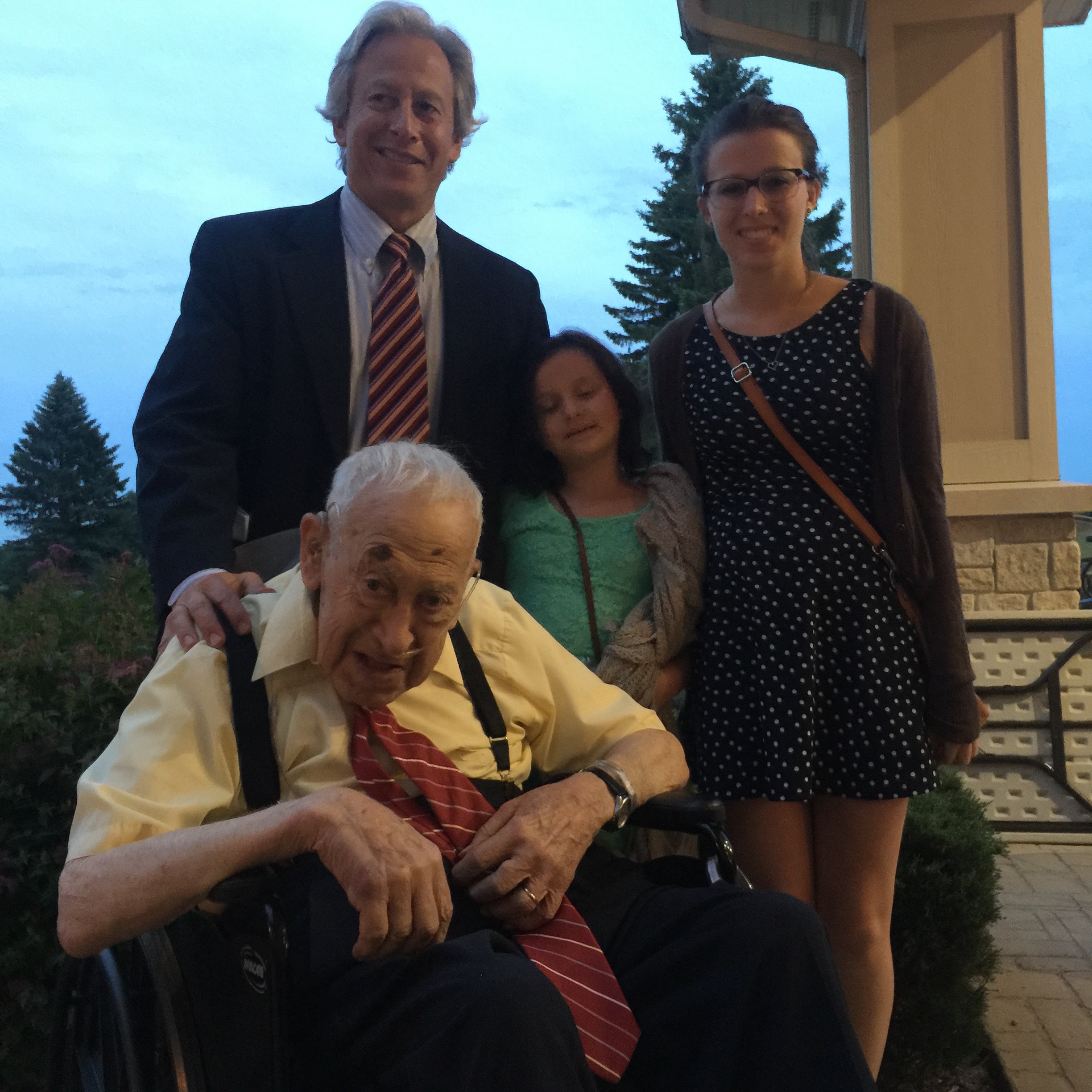
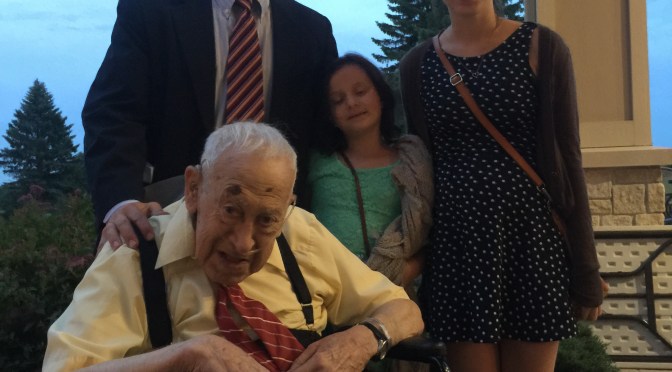
I had the rare honor of being able to offer a living eulogy earlier this week. My dad, Louis N. Cinquino, was chosen by the Paulo Busti Cultural Foundation of Genesee County in Batavia, NY as one of their Outstanding Italian-Americans, and I was asked to receive the award on his behalf. At 94, he’s lost a bit off his fastball, but he was able to rally and make it to the dinner. He even stayed awake through some long speeches, right until the very last pasta joke.
My daughters were able to join me for the dinner to hear a tiny slice of what their grandfather meant to so many people over the years, as his service to the Army, American Legion, Knights of Columbus, our local church, and the Boy Scouts was recounted. The last group, the scouts, stung a little for me personally, since I didn’t even make the rank of Tenderfoot, while my overachieving brothers both attained Eagle Scout status. So I had to look for other ways to distinguish myself in my father’s eyes– such as writing and public speaking, which finally paid off.
I’m not sure how much of my tribute that he heard, but I did give him a copy of my remarks to read, and I hope he is re-reading them today. I share them here on Father’s Day.
The Original Louie Cinquino is a man of so few words that even a few are one too many. He’d only need two words tonite—Thank you.
My father would want to thank the Paulo Busti Cultural Foundation for honoring him tonight, and more importantly for the work they do to promote Italian culture here in Genesee County. Because nothing means more to him than his Italian heritage.
Well maybe one thing—his wife Rita.
He would want to thank her most of all.
He would be the first admit what we all know—that she shares equally in any award or recognition he’s ever received. She is the love of his life—and the person who brings out the best in him.
He would also want to thank his brothers Joe and John, and all the members of the Cinquino family that are here this evening.
He would want to thank his kids for all the sporting events we made him sit through, all the messes that his grandchildren made of his house, and all the tuition money he was able to spend on our Catholic school and college educations.
He would want to thank his teachers, his bosses, his coworkers, the men he served with in the war, and those he served with back home, at St. Joseph’s Church, with the Scouts, the Legion, the KC and more. He’d want to thank every single one of you, plus the cooks, waitresses and the people who picked the lettuce we just ate, by name.
Last year, I invested a couple thousand dollars to gain a certificate in what’s called Positive Psychology. It’s basically the study of happiness and human performance.
Halfway into the first lecture, we learn the number one secret to prolonged and authentic happiness. The one thing, above all, that happy people cultivate and practice.
Gratitude.
Wouldn’t you know it— I felt like I just paid $24 for a plate of greens and beans at fancy Italian restaurant—I could have saved a lot of money by just staying home with my Dad.
Even in this room filled with his family and closest admirers, we’d be hard pressed to come up with a detailed list of what, specifically, he built or invented or achieved.
Yet, as poet laureate Maya Angelou said,
“I’ve learned that people will forget what you said, people will forget what you did, but people will never forget how you made them feel.”
My dad didn’t need a certificate or a college degree to learn that. He just did it.
On behalf of everyone in this room, and all those who could not be here, but know this to be true.
Thank you, Dad, for the way we feel when we are with you.
In the Disney movie McFarland, USA: Championship Run, the story of a Latino high school cross country is told through the eyes of the coach, played by Kevin Costner, who the boys dub “Blanco” because of his name, Mr. White.
In true Disney fashion, Blanco does it all in the movie, from rising out or his own checkered past to getting the most out of every kid on the team and inspiring the community to support them on their road to the state meet. This is the first weekend that the film is available on DVD. It’s worth renting, as I reported in my previous post, Rent–and Run!.
Did you ever have a Blanco in your life? A coach who made a difference to you and helped shape you into the athlete you were then and the person you are now?
What I define as great coach is one who gets more than more. By that I mean, a good coach gets more from you than you could get by yourself. But a great coach gets even more– more than others ever expected of you and sometimes more than you even knew was there.
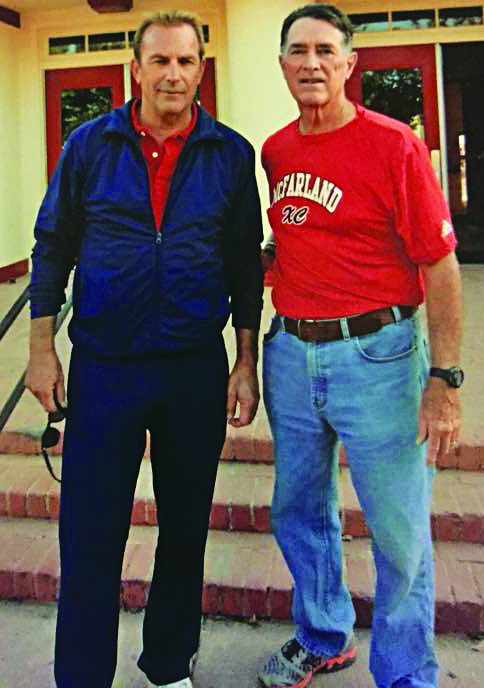
Here’s 3 traits that I’ve found in the great coaches that I’ve worked with in a variety of sports.
1. Establish the Framework for Practice – This is sometimes thought of as instilling discipline. But to me, it’s so much more than that. A good coach can try to keep discipline with a firm hand, cracking down on behaviors destructive to the team. But a great coach pragmatically builds your tolerance for practice by giving you a self-building path. She isn’t forcing you to behave or work, she is showing you how to build a pyramid, by laying before you the blocks of useful training that you put on top of each other to lift yourself up to the pinnacle.
It’s not about discipline, it’s about establishing work habits that result in a better you.
2. Inspire You to Keep Going – Any sporting activity provides a few opportunities for success, and a huge assortment of places to quit or fall short of applying yourself. Teams and players that win big usually display winning habits all the way through their training– not just in some fairytale clutch ending. In McFarland USA, whatever success the team gets isn’t because it gets lucky, or because all of a sudden they believe in themselves and decide to run harder. Their championship run builds day-by-day as they grow into their own power as athletes. This happens, in part, because of their own work habits, and in part, because Blanco has an unwavering belief in them and a willingness to share that vision in grand terms. That vision carries them when doubts and fatigue and circumstance threaten to have them settle for less.
It’s not just believing in yourself — that’s merely self esteem, which is necessary but not sufficient. It’s believing in the work that will transform you into a champion. Then doing it.

3. Teach You Something You Don’t Know – An athlete who works hard in a structured, motivated way has a great advantage over the competitors that don’t work as hard. But that’s hardly enough. Most athletes work very, very, hard. Competitions involve great tests of skill and strategy– and if you are only in better shape, but can’t execute the maneuvers of your sport, you can only go so far. This often plays itself out in youth athletics when a player grows up faster than his peers and physically dominates them along the way. But tide turns when the peers catch up, because they have played for years as scrappy underdogs, learning the little ways to get better when they are at a physical disadvantage. The late-blooming athlete then can coordinate his new physical self and apply this skill with tremendous success, where the early-bloomer finds it too late to build those skills that are suddenly necessary. A great coach teaches the skills and strategy of the game at every opportunity, whether they are needed at that moment or not.
A good coach helps you practice. But keep in mind, practice does NOT make perfect. Practice makes permanent. If what you are practicing is fundamentally flawed, it’s not really helping you. A great coach makes sure that what you are making permanent are the skills you need for winning.
Who’s your Blanco? What did they do that helped you get more than more?
One morning ritual I’ve been working on establishing is a first-thing-top-of-mind-write session. It’s just a minimum of one page, handwritten stream of consciousness dump into a book I keep bedside, preferably before I check my phone for any messages or news of the day. Just what’s running through my head when I awake.
I know that rituals are one of the key tools we have in transformational change, so it’s something I try to make time for, directly after brushing and flossing.
Hopefully these journal entries won’t come back to haunt me like they have done for a dear friend of mine. My friend ruminates and keeps going back to re-read the journals from years ago, something I simply find it unbearable to do, unless necessary for a writing project.
I have to admit, when I can stomach the look back, it’s compelling. I mean what’s more fascinating to us than ourselves? In my case, it’s like driving by a wreck on the highway. Not pretty, but also hard to look away.

But here’s the problem — our journals lock in thoughts from another time—and keep alive old grudges, pains, distresses. At least for me, it’s the things (and people!) that bother me that I tend to write down. “Life is quiet and peaceful and I’m enjoying just sitting here and writing,” doesn’t make it into the journal.
With my friend, this habit actually fed and further burned in feelings of unhappiness to the point where it affected a long marriage. My friend couldn’t move on from the past and wanted everyone to know what had been endured, so we could all share again in the suffering. This rekindled the suffering and locked in that version of the truth, even if though the journals described a world that largely was no longer present.
I talk about suffering in my journal too. But I do it to let go of those thoughts- it’s like I am putting them on little slips of paper and casting them away from my soul. It’s an exhale for me. Which is what I need to do before I can inhale again with fresh air of today.
Yet for some people like my friend, memories of these pains and transgressions– even if they are not written down in a journal– are often revisited with little reminders, grudges and perceived offenses that we just can’t put aside.
It’s as if the pain is kept under lock and key in a bank vault, where it builds interest and dominates our emotional portfolio. The distress is perpetually revisited and kept alive, so we remain shackled in the chains of the past, rather than in the wholeness and freedom of the present.
Re-reading a journal does provide a fuller knowledge of how we got here, I understand that. But when we approach it as if it is the only version of history, we stand the risk of just picking your scabs and preventing healing.
Journals are permanent, life is not.

A poet’s tortured journals of woe make good copy, but do not fuel a happy life. Perhaps we’ve been taught that it’s more romantic to be miserable, forlorn and misunderstood, waiting for the world to reconfigure and recognize your gift.
I have a common bit of advice I give to people who come to me with worries and concerns about the future– “let’s not read ahead. One page at a time.”
Let’s also not keep reading too far back either. Some of those characters in our back story are better off left there, as we build a better version of our self.





 Taking Mulligans